How a Geothermal System Heats a House
A plain-language look at how a geothermal system moves heat between the ground and your house.
October 7, 2026 · 3 min read
A geothermal system doesn't burn anything to heat your house. It moves heat. In winter it collects warmth from the ground and carries it indoors. In summer it runs the other way, pulling heat out of the house and putting it back into the ground. Paul's AIR FX specializes in installing geothermal systems, and this is how they work.
The Ground as a Heat Source
A few feet below the surface, the ground stays much steadier than the air above it. Air temperature in the Yakima Valley can swing from the 90s in summer to below freezing in winter, but the earth below the frost line changes slowly through the year.
A geothermal system takes advantage of that steady ground by using it as a place to take heat from in winter and send heat to in summer. The part that does the exchanging is called the ground loop.
Closed Loop or Open Loop
Paul's AIR FX describes two types of ground loop, and the difference is whether the fluid is reused or the water is drawn fresh.
- Closed loop: a sealed network of buried pipe filled with a fluid that circulates between the ground and the heat pump, over and over. The pipe can be laid in trenches, set in vertical boreholes, or submerged in a pond or lake.
- Open loop: water is drawn from a source such as a well, pond or lake, passed through the heat pump, and returned to the source.
Which one suits a property depends on the land, the water available and local requirements. An open loop needs a dependable water source, and the rules about returning water vary, so that is one more thing to sort out before any design is settled. A closed loop needs enough space for the pipe or the right conditions for drilling.
The Geothermal Heat Pump
Inside the house, a geothermal heat pump does the work. It takes heat from the fluid coming off the ground loop, concentrates it and delivers it to your home. In summer the process reverses: the unit takes heat from the house and sends it back to the loop.
It's the same basic idea as an air-source heat pump, but with the ground as the partner instead of the outdoor air. Because ground temperatures change so little, the unit isn't working against freezing air on the coldest nights.
Getting Heat to the Rooms
Once the heat pump has made heat, the home needs a way to spread it. Geothermal systems can use either of two distribution methods:
- Ducted: the familiar forced-air system, with a blower moving warm or cool air through ducts to registers in each room.
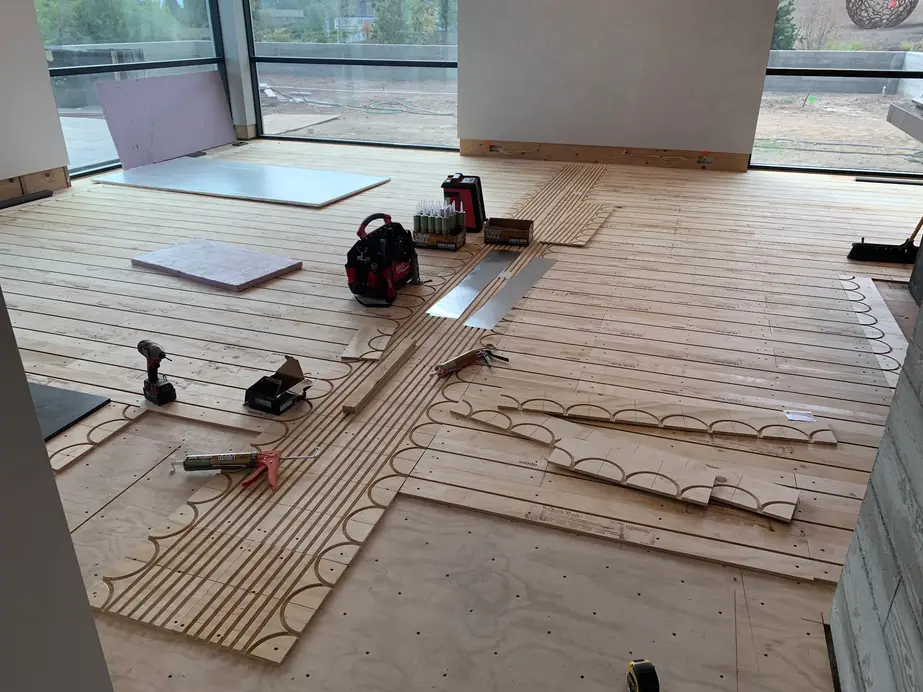
- Hydronic: a network of fluid-filled piping that runs throughout the home, which can feed radiant floors or other water-based heating.
Ducted systems suit homes that already have good ductwork and want cooling and heating through the same vents. Hydronic distribution suits owners who prefer the even feel of radiant warmth, especially in new construction. Paul's AIR FX installs hydronic and radiant systems as well, so the two can be planned together.
What Homeowners Get Out of It
Paul's AIR FX points to three benefits of geothermal:
- High energy efficiency, because the system moves heat that's already there instead of making it by burning fuel
- A low environmental footprint, since the heat comes from the ground and nothing is burned at the house to make it
- A longer lifespan
Those are real advantages, but they come with trade-offs, which brings up installation.
An Honest Note About Installation
A geothermal installation is more involved than swapping one furnace for another. Someone has to dig trenches or drill boreholes, or place loops in a pond, then connect everything to the house and the heat pump. Work happens outside as well as inside, and the property has to suit the plan.
That's why the best time to plan is early. Paul's AIR FX works with your floor plans and square footage to find an efficient solution for new construction, and a geothermal system is easiest to design in before the landscaping is done. For an existing house, the conversation starts with the lot, the water, the ductwork or piping you already have, and what you want the system to do.
A good first step is to talk it through. To ask whether geothermal fits your property, call Paul's AIR FX at (509) 225-3420 or use the contact page.
Paul's AIR FX, (509) 225-3420
Call (509) 225-3420