Hydronics and process cooling
Boilers and chillers for homes and businesses in Yakima
Boiler installation and replacement, chiller installation and repair, and the hydronic piping that ties a heating system together.
Chapter 01
Five boiler problems the crew gets called about
A boiler usually tells you something is wrong well before it quits. The five signs the crew hears about most are no hot water or heat, strange noises, a radiator that is not getting hot, a boiler that turns itself off, and thermostat issues.
Each one points somewhere different. A cold radiator and a boiler that shuts itself off can look like the same problem from the living room, and they often are not. Paul's AIR FX looks at the system before anything gets replaced, so the fix matches the fault.
The service side covers boilers that run on gas, electric or oil: cleaned, inspected and repaired. If yours is making a noise it never used to make, that is worth a phone call before the first cold week.
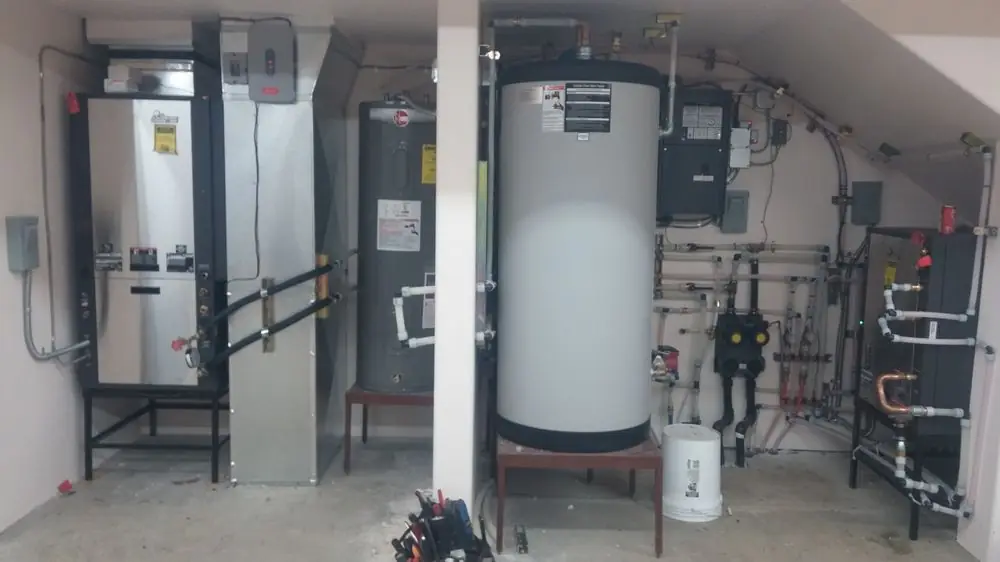
Mechanical room with two wall boilers and a large indirect water tank on a piped stand
Boiler installation and replacement
Every boiler wears. Before anyone talks about a new one, the crew assesses what is going on: ordinary wear, damage, or a failure that has already happened. Plenty of boilers can be repaired and put back to work.
When repairs keep stacking up or the damage is past fixing, replacement is the better investment, and Paul's AIR FX handles the installation too, from the boiler itself to the connections that tie it into the heating loop. In new construction, the boiler goes in as part of the hydronic layout from the start.
Chapter 03
Chillers that protect machinery, stock and people
A chiller keeps machines and the spaces around them from running too hot.
Paul's AIR FX installs and repairs industrial chillers. The job protects three things: machinery that wears out early when it overheats, inventory that suffers when heat reaches it, and the staff who have to work in a space that runs hot all day.
Businesses often pair a chiller with the rest of their system: rooftop units, ductless options, and radiant cooling where the space calls for it. The same crew also handles commercial kitchen ventilation, so a building with a process line and a kitchen has one contractor to call.
Hydronic piping, as the crew's own photos show it
Hydronic heating moves hot water through pipe instead of hot air through duct, and the photos from the crew's own jobs show what that looks like. One mechanical room has copper supply and return headers on a white wall with a row of blue circulator pumps. In another, a wall-hung boiler sits above a copper loop, a blue expansion tank and four zone circulators.
A third photo shows radiant floor panels laid across a subfloor, with tools and tubing coils beside them. The photo on this page shows two wall boilers next to a large indirect water tank.
Those are the working parts of a hydronic system: headers, zone circulators, an expansion tank, floor panels. With a circulator on each zone, one room can call for heat without running the rest of the house.
“Highly professional and responsive, even during this pandemic. They are on time, courteous, and helpful.” Stacy M, quoted on their site.