Signs You Need An AC Duct Repair
Your ducts work out of sight, but five signs inside the house tell you when they need attention.
October 7, 2026 · 4 min read
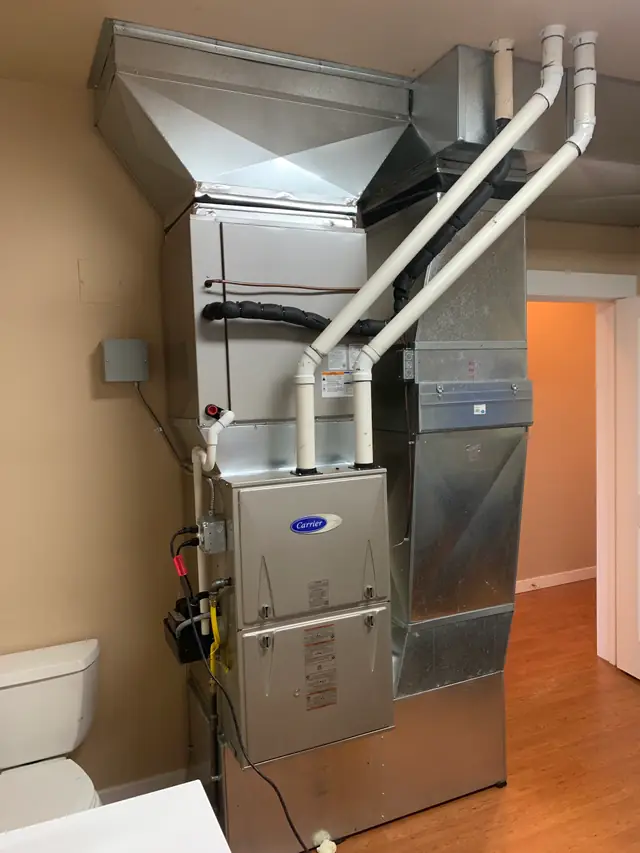
Your ductwork does its job out of sight, behind drywall, under floors and above ceilings. Most people never think about it until a room feels wrong or the energy bill climbs. Ducts carry heated and cooled air from your equipment to every room, and when they leak, crush, come apart or fill with grime, the furnace or air conditioner usually takes the blame for a problem that started somewhere else.
The crew at Paul's AIR FX in Yakima brings 37+ years of experience in the trade to homes and businesses across the Valley. Here are five signs that point at the ducts, and what to do about each one.
Signs of Poor Air Quality
Ducts are supposed to be a sealed path. When there are gaps, the return side of the system can pull air from places you never meant to breathe from, like attics, crawlspaces and wall cavities. That air brings dust, insulation fibers and whatever else is hiding there, and the system spreads it through the house.
Dust is a fact of life in the Yakima Valley anyway, with dry summers and orchard country all around. But if you're dusting more often than you used to, your filters clog faster than they should, or allergy symptoms seem worse indoors than outside, leaky or dirty ducts are a reasonable suspect.
Issues with Home Temperature
One bedroom that never cools off. A living room that takes forever to warm up. A thermostat that says one thing while half the house says another. Uneven temperatures are one of the most common duct complaints, and the cause is often simple: conditioned air is escaping before it reaches the room.
A section that has pulled apart in the attic can dump cooled air into a space nobody lives in. The same goes for a system that's heating but blows cool air from some vents in winter. Equipment can cause that, but so can ducts that have separated or run through cold space without enough insulation, letting the air lose its heat on the way to you.
Poor Air Flow
Hold your hand up to a supply vent. If the air feels weak compared with what you remember, or weaker in one room than the next, airflow is being lost somewhere. Common culprits are a clogged filter, a flexible duct that has been crushed or kinked, a joint that has come loose, or a blockage inside the run.
Start with the easy check and put in a clean filter. If the weak flow stays, closing off other vents won't fix it and can put extra strain on the system. Have the ductwork looked at instead.
Noisy Air Ducts
Some duct noise is normal, like a soft whoosh when the system starts. Louder sounds deserve attention. Popping or banging when the system turns on or off is often sheet metal flexing as it heats or cools. Rattling can mean a loose section or a fastener that has backed out. A whistle often points to air squeezing through a small leak or a restricted opening.
None of these sounds is an emergency on its own. They're the system telling you something is loose, undersized or leaking, and loose ducts tend to get worse over time, not better.
Moldy Smells & Dusty Vents
A musty odor when the system runs is a signal to take seriously. Ducts that pass through humid or unheated spaces can collect moisture, and moisture plus dust gives mold and mildew a place to grow. Paul's AIR FX lists excess moisture and mold or mildew odors among the warning signs it looks for.
Dust puffing out of the registers, or a gray film around the vent covers, points the same direction. Don't cover a smell with an air freshener. Find the source.
Repair, Seal or Replace
Not every duct problem means tearing out the whole system. Disconnected runs can be reconnected, leaking joints can be sealed, and ducts that pass through attics or crawlspaces can be insulated so the air keeps its temperature on the way to you.
Paul's AIR FX also provides AeroSeal duct sealing. In general terms, the method seals leaks from the inside: sealant particles travel through the duct system with the air and stick at the edges of holes, closing gaps in places no one could reach with a tube of mastic.
Replacement comes into the picture with age and damage. Paul's AIR FX says that if your duct system is more than 20 years old, replacement may be worth considering. Old tape fails, flexible duct tears, and sections can come apart entirely. A few things tip the decision one way or the other:
- How old the system is, and whether it's past the 20-year mark
- How much of the ductwork can actually be reached for sealing and insulating
- Whether the damage is a few bad joints or a pattern across the whole system
- Whether new heating or cooling equipment is going in, since it's only as good as the ducts it connects to
Start with a Free Vent Inspection
Paul's AIR FX offers free, on-site air vent inspections and repair solutions. During the free consultation, the crew assesses your ductwork and talks through whether sealing, insulating or replacing makes sense for your home. It's a good way to find out what's really going on before you pay for a new furnace that may not have been the problem.
If any of these five signs sound like your house, call Paul's AIR FX at (509) 225-3420 or use the contact page to set up a free vent inspection.
Paul's AIR FX, (509) 225-3420
Call (509) 225-3420More articles
What Happens on an AeroBarrier Day
A walk through a day of whole-building air sealing, from the first fan test to the final reading.
When Your Boiler Is Telling You Something
Five common boiler problems, what usually causes them, and which ones need a technician right away.