Envelope sealing
AeroBarrier and AeroSeal home sealing in Yakima and Eastern Washington
Paul's AIR FX seals the whole shell of a home or building from the inside, with Energy Star-certified sealant, in as little as three to four hours.
Chapter 01
Why an airtight shell matters
A building leaks in a lot of small places: where framing meets the slab, around windows and outlets, along the top plate, past the attic hatch. Conditioned air slips out through those gaps while dust, outdoor air and cold drafts slip in. Sealing the shell closes them from the inside, and it changes how everything else in the building performs.
Paul's AIR FX lists six things a tight building gets you: higher energy efficiency; moisture regulation and less condensation buildup; fewer uncomfortable drafts, particularly during the harsh winter months; reduced exposure to contaminants, pests and airborne disease; better use of heating and cooling equipment; and consistent, reliable indoor air quality throughout the building.
Eastern Washington runs into the 90s in August and well below freezing in January. A shell that holds its conditioning matters twice a year, and it lets the furnace, heat pump or boiler you already own do its job.
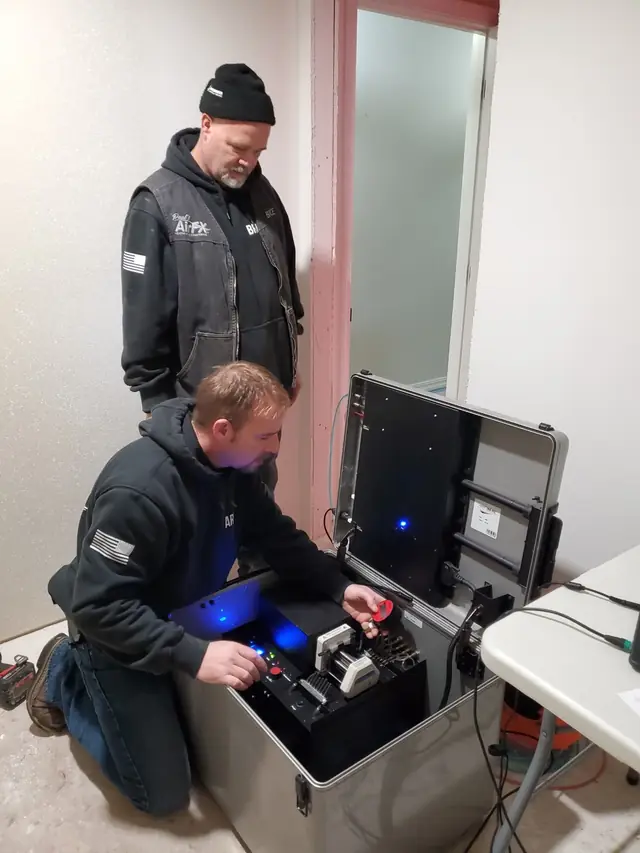
Two Paul's AIR FX technicians running the AeroBarrier sealing rig in a drywalled room
How the sealant goes in
The building is pressurized, and the sealant is applied as a fine fog through that pressure. As it goes in, it builds up and hardens, filling gaps, cracks and spaces that a caulk gun could never reach. Air moving toward a leak carries the sealant right to it.
AeroSeal is designed to be applied after construction as well, so a finished house can be sealed without opening walls. The process can take as little as three to four hours. To keep everyone safe, the building is usually inaccessible during application, so the crew plans the day with you before the rig comes in.
The sealants are Energy Star-certified AeroSeal products. The crew's own Facebook line says it plainly: “We Are Your Eastern Washington AEROBARRIER specialist.”
Chapter 03
Building Envelope Inspection
A Building Envelope Inspection reveals hidden air leaks before any sealant goes in. The crew sets a blower door fan into an exterior doorway, pulls the building to a test pressure, and reads how much air is moving through the shell.
That reading shows whether the building needs sealing at all and how serious the leaks are. It also gives a starting point to measure against once the work is done. New builds and older Yakima homes alike get surprises from this test.
AeroSeal for ductwork
The same sealing technology works inside duct systems. Ducts that leak into an attic or crawl space waste heated and cooled air before it reaches a single room, and AeroSeal closes those leaks from the inside of the duct run.
If rooms in your house are slow to heat or cool, ask the office whether ducts or the shell itself are the better place to start. Many jobs involve both.
Paul's AIR FX is a Washington construction contractor, license PAULSAF851UU, active with WA L&I, and an AeroBarrier and AeroSeal provider with 37+ years in the trade.
A sealed shell pairs well with right-sized equipment. See HVAC installation for new systems, or air ducts for inspection, sealing and replacement of the runs inside the walls.
“Knowledgable staff provides friendly advice and follow through with details!!!!! Option am pricing to help save dollars!”